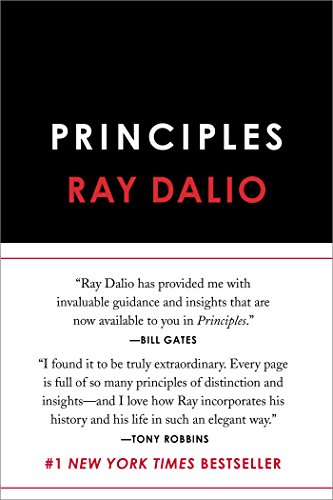
Principles
📅 Finished on: 2020-07-07
When you experience pain, remember to reflect. You can convert the "pain" of seeing your mistakes and weaknesses into pleasure: you have found an opportunity to get better
Tough experience, quite dull. More than a book, it is a manual with a list of principles, something for management more than for me. Certainly interesting, but a tough read. It might be useful to reread it in the future. Good summary here.
Notes
3 parts: his life (not very useful), the fundamental principles, and 200 points with various context. Focus on the principles, obviously.
-
Principle 1: embrace reality and deal with it. Focus on your weaknesses, on the things you can control, and address them with logic.
-
Principle 2: 5-Step Program to get what you want from life. His most important point:
- Have clear goals.
- Identify the problems that stand in your way.
- Accurately diagnose the problems to get at their root causes.
- Design plans that will get you around them.
- Do what is necessary to push these designs through to results.
-
Principle 3: be open-minded. Set the ego aside, listen to everyone, be curious to learn, and look at mistakes as opportunities to grow.
-
Principle 4: understand that people are different. Some are left, some are right, some structured, others creative, etc. There can be misunderstandings, so recognize this and get to know them.
-
Principle 5: learn how to make decisions effectively. By using all these principles he can make decisions more easily, simply by following them. He already has a ready-made structure. This is why it might be worth rereading it when I am a decision-maker.
-
To conclude, the article identifies 11 main lessons:
- Pain + Reflection = Progress.
- Have a higher perspective of yourself and the world.
- Success = Meaningful Work + Meaningful Relationships.
- Overcome your two barriers to success: Ego and Blind spots.
- Be radically open-minded to be successful.
- Follow the looping 5-step process to get to success.
- Know your objective strengths and weaknesses and those of others.
- Find people with complementary strengths to help you along the 5-step process.
- Make believability-weighted decisions by considering the credibility of people.
- Use principles to systematize your decision making.
- Navigate levels of a decision effectively.