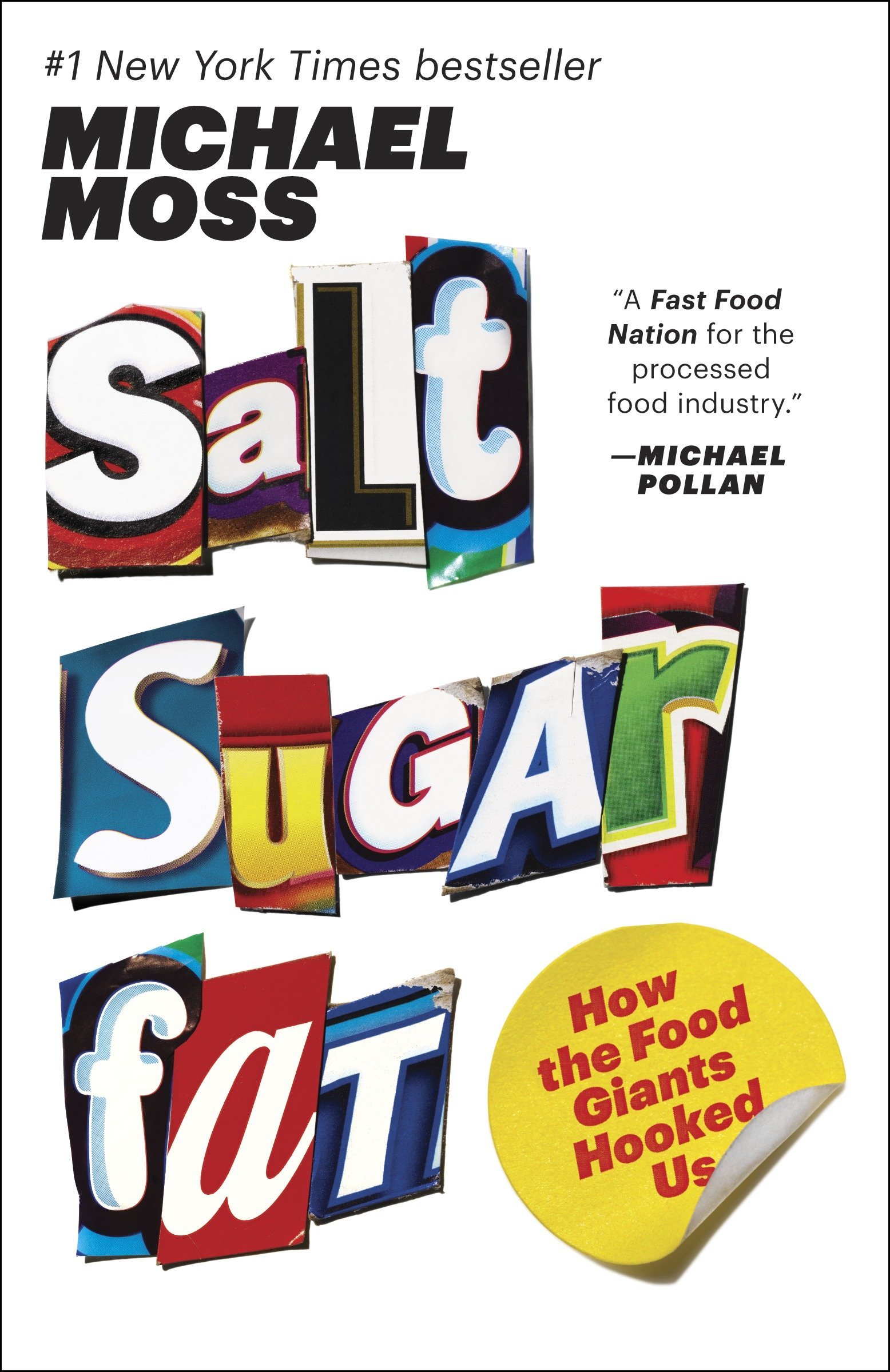
Salt Sugar Fat: How the Food Giants Hooked Us
📅 Finished on: 2022-04-10
They may have sugar, salt, and fat on their side, but we have the power to inform ourselves and choose. Also, I did not know there was so much sugar in packaged desserts!
Recommended on Reddit for nutrition, won a Pulitzer, and he writes well.
Excellent book; I did not give it 5 stars because it gets a bit repetitive toward the end, and the salt section did not fully convince me, but it is very well written and made me pay much more attention and a bit wary of packaged foods.
The takeaway is that big brands, especially in US where there is less attention to diet, scientifically craft recipes with large amounts of sugar, fat, and salt to make customers as hooked as possible, and thus make more money. The book explores these stories of products that are harmful to health and how multinationals like Kellogg’s, Kraft, Coca-Cola, PepsiCo, Nestle and co. have clashed with health advocates for decades. Paradoxically, Philip Morris comes out looking better than the rest.
Notes
- People do not have time and buy packaged food, which is more convenient and quick to eat. But what is the tradeoff?
🧁 Sugar
- A “magic” ingredient that creates dependence. There is a “bliss point” at which the consumer finds it most pleasing and keeps eating, calculated in the lab.
- Similar to the effect of drugs, widely used even in savory products. Many junk foods contain 20-30% of the daily sugar intake in a single serving. Obviously, it is very harmful in the long term.
- Stories of how Coca-Cola, Kellogg’s, Kraft, and others increased sugar in their products over time to beat the competition.
🧈 Fat
- Unlike sugar, there is no bliss point, so a lot can be added without worrying about flavor.
- Combining with sugar increases craving.
- Stories of “fake” cheeses created by Kraft, the Lunchables line, and many other tactics to sell more, such as highlighting that something was reduced, like fat, to mask the fact that sugar was added to balance the bliss point.
- Smart marketing campaigns to de-demonize fat.
- It also helps texture and color, making it hard to do without.
🧂 Salt
- Very easy to overdo; this chapter felt a bit more tedious. All that sodium is certainly not good.
- There are alternatives with the same taste but less sodium; they are on the market, but salt is so cheap that companies do not care.
- It eliminates many off flavors, for example in reheated meat, making it hard to remove.